Sustainable Care Home Design: What Families Should Look For
By sima kornbluth · Published 2025-10-19 · Last reviewed 2026-09-18
A well-designed, sustainable care home stays at a comfortable temperature in winter and summer, has good natural light, safe gardens residents can actually use, clear dementia-friendly layouts and efficient heating and ventilation. For families, the green features matter mainly because they affect comfort, health and running costs, so judge a home by how it feels to live in.
For a family choosing a care home, "sustainable design" matters for one main reason: a building that is energy efficient, well ventilated and full of daylight is usually more comfortable and healthier to live in. Good design also helps people with dementia find their way and stay independent for longer.
You do not need to judge solar panels or insulation ratings. You need to know whether your relative will be warm in winter, cool in a heatwave, able to get outside, and able to find the toilet at night.
Why does the building matter so much to residents?
Most care home residents spend nearly all their time inside one building. Temperature, light, noise and layout shape their comfort, sleep, mood and safety every day.
Older people are more vulnerable to both cold and heat. The NHS advises keeping rooms that are used regularly at at least 18°C and lists people aged 65 and over among those most at risk from cold. It also lists older people among those most at risk in hot weather.
In England, the Care Quality Commission's premises regulation requires care homes to be clean, secure, suitable and properly maintained. It does not set green or energy standards, so sustainability is a choice each provider makes rather than a legal requirement.
How well does the home handle heat and cold?
Many care homes were built or extended before summer overheating was a concern. Well-insulated modern buildings can hold heat, so good design means managing summer heat as well as winter cold.
Questions to ask:
- How do you keep bedrooms and lounges cool in a heatwave? Is there a cooler room residents can use?
- Do you monitor room temperatures, and what happens if they get too high?
- Can each bedroom's heating be adjusted?
- Do windows open safely for ventilation?
- Are there blinds, curtains or external shading on sunny sides of the building?
The UK Health Security Agency publishes hot-weather guidance for social care managers and staff. A well-run home will be able to tell you how it follows it.
Does the home have good light and access to outdoors?
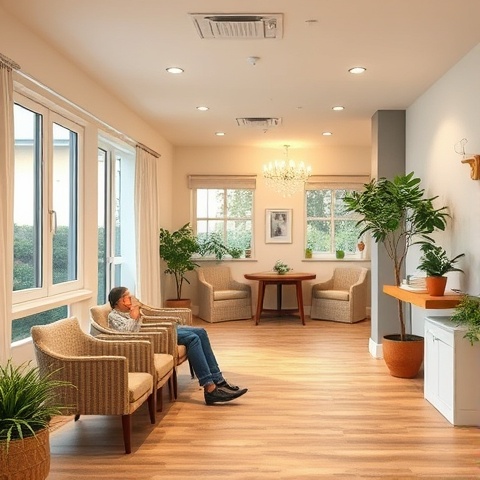
Daylight helps people keep a normal day-night rhythm, and good lighting reduces confusion and falls. Look for:
- Lounges and dining rooms with large windows and plenty of daylight.
- Bright, even lighting in corridors and bathrooms, without glare or deep shadows.
- A garden or courtyard residents can reach easily, ideally without needing staff to unlock a door.
- Level paths, handrails, seating and shade outside.
- Evidence that the garden is actually used: raised beds, bird feeders, washing lines, residents outside on a fine day.
A beautiful garden that stays locked is not much use. Ask how often residents go out, and how staff support people who cannot go out alone.
What makes a home dementia friendly?
Design can make a real difference for people living with dementia. The NHS and Alzheimer's Society describe several features that help people find their way and feel safe, such as good lighting, colour contrast and clear signs.
Look for:
- Contrast: toilet seats, grab rails, doors and furniture in colours that stand out from walls and floors.
- Clear signs: simple signs with words and pictures for toilets, bathrooms and lounges, placed where a seated or stooping person can see them.
- Plain, matt flooring: bold patterns can be disorientating, and shiny floors may look wet to someone with dementia.
- Short, simple layouts: small group living areas rather than long identical corridors.
- Personal touches: memory boxes or photos by bedroom doors to help people recognise their room.
The Alzheimer's Society publishes a dementia-friendly environment checklist that you can take with you on a visit.
Do energy-saving features affect fees?
Energy is one of the larger running costs for a care home. Efficient heating, insulation, LED lighting or solar panels can make a home less exposed to price rises, but there is no guarantee that savings are passed on to residents.
What you can reasonably ask:
- How are fee increases decided, and how much notice is given?
- Has the home had to raise fees because of energy costs in the past?
- Are there any extra charges that depend on energy use, such as for personal heaters?
Fee terms should be set out clearly in the contract. If anything is unclear, ask for it in writing before your relative moves in.
What should I check on a visit?
Use your senses as well as the brochure:
- Temperature: is it comfortable in lounges, bedrooms and corridors? Visit on a hot or cold day if you can.
- Air: does it smell fresh? Stuffy air or persistent odours suggest poor ventilation or cleaning.
- Noise: can residents hear each other and the television, or is it echoing and loud?
- Light: are rooms bright enough to read in? Are there dark spots in corridors?
- Outdoors: can residents get outside easily and safely?
- Wayfinding: could your relative find their room, the toilet and the lounge?
- Inspection report: read the latest report from the regulator (CQC in England, the Care Inspectorate in Scotland, Care Inspectorate Wales or RQIA in Northern Ireland) for comments on the environment.
Frequently asked questions
Are new care homes always better than older ones?
Not necessarily. New buildings often have en-suite rooms and better insulation, but some overheat in summer. Older homes can be warm and homely if well maintained. Judge the building on comfort and how residents use it, not its age.
Do care homes have to meet environmental standards?
Care homes must meet building regulations and, in England, CQC's requirements that premises are safe, suitable and well maintained. There is no specific green standard for care homes, so sustainability features vary by provider.
What temperature should a care home be?
The NHS advises heating regularly used rooms to at least 18°C for older people, and many residents prefer it warmer. In hot weather, homes should monitor temperatures and have cooler areas available. Ask the home how it manages both.
How can I tell if a home is suitable for someone with dementia?
Look for good lighting, colour contrast, clear signs with pictures, plain flooring and easy access to a safe garden. Ask how staff help residents find their way, and use the Alzheimer's Society environment checklist on your visit.
Will a greener home cost my relative less?
Not directly. Energy savings may help keep a home financially stable, but fees are set by the provider. Ask how fee increases are decided and check the contract terms.
Key takeaways
- Green design matters to families because it affects comfort, health and running costs.
- Older people are vulnerable to both cold and heat; ask how the home manages each.
- Daylight, safe outdoor space and clear layouts help residents, especially people with dementia.
- There is no legal green standard for care homes, so features vary.
- Visit in person, use your senses, and read the latest inspection report.