Home care or a care home: how to decide what's right
By CareFinder Team · Published 2026-09-19 · Last reviewed 2026-09-19
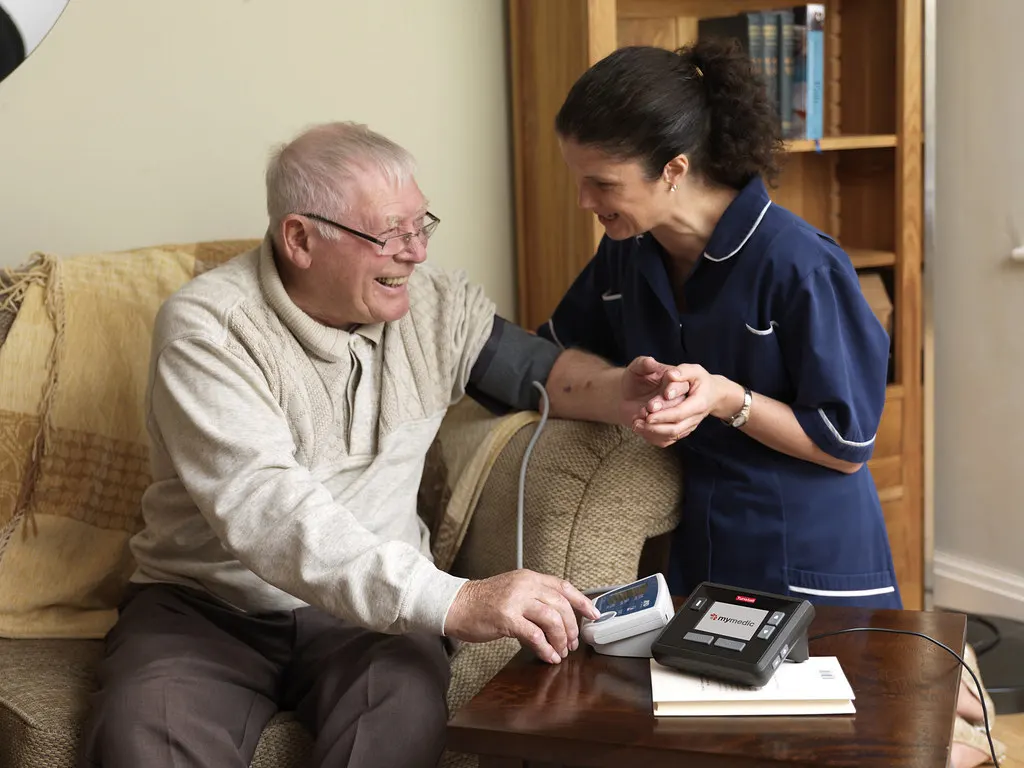
Home care suits someone whose needs can be met in planned visits, or by a live-in carer, and who is safe in the hours between. A care home suits someone who needs help or supervision at unpredictable times, day and night. Compare the two on four things: needs across 24 hours, safety when alone, the strain on family carers, and the weekly cost under your nation's funding rules.
Neither home care nor a care home is the better choice in itself. Home care works when a person's needs can be met in planned visits, or by a live-in carer, and they are safe in the hours between. A care home works better when help or supervision is needed at unpredictable times, including at night. Most families decide by looking at four things: needs across the full 24 hours, safety when alone, the strain on family carers, and how the costs and funding rules compare.
What is the real difference between home care and a care home?
The three main options are:
- Home care (domiciliary care). Paid carers visit at agreed times, from a single call a week to several visits a day or an overnight carer.
- **Live-in care.** A carer lives in the house and is on hand for most of the day, with breaks and their own room.
- A care home. A room, meals and staff on the premises around the clock. A nursing home also has registered nurses on duty.
The important difference is not the quality of care, which can be excellent or poor in any of them. It is what happens between the moments of care. With visiting care, the person is alone, or relying on family, the rest of the time.
| Home care visits | Live-in care | Care home | |
|---|---|---|---|
| Staff on hand | Only during visits | Most of the day, one person | 24 hours, a team |
| Surroundings | Own home, own routine | Own home, shared with a carer | New room, shared spaces |
| Company | Carers, family, visitors | The carer, family, visitors | Other residents, staff, activities |
| Who manages it | Family or the person, with the agency | Family or the person, with the agency | The home |
| How the cost behaves | By the hour, rises as needs grow | One weekly price | One weekly fee covering room, food and care |
Which needs can be met at home, and which are hard to?
Home care tends to work well when:
- needs are predictable, such as getting up, washing, dressing, meals and prompts to take medicines
- the person is safe alone between visits and could call for help or use an alarm
- the home can be adapted, for example with a stairlift, grab rails or a downstairs bed
- the person strongly wants to stay, and has some company other than the carers
It becomes hard to sustain when:
- help is needed at times nobody can predict, especially at night
- there are repeated falls, or the person cannot get up or raise the alarm afterwards
- dementia has reached a point where the person leaves the house and gets lost, or leaves the cooker or taps on
- two carers are needed several times a day for moving and handling
- a family carer who has been filling the gaps is exhausted or becomes ill
The Alzheimer's Society describes the same pattern for dementia: a move usually happens because the right level of care can no longer be given where the person lives. Its guidance on who makes the decision about a care home is worth reading alongside this.
How do the costs compare?
Home care is charged by the hour and a care home by the week, so they are easy to compare badly. Work both out as a weekly total.
- A few hours of home care a week costs far less than a care home.
- As the hours grow, the gap narrows. Several long visits a day, plus nights, can cost as much as a care home place or more.
- At home you still pay to run the house: food, heating, council tax, insurance and repairs. A care home fee includes the room, meals, heating and laundry as well as care.
- Live-in care is priced by the week. For a couple it can compare well, because one carer may be able to support both people, while a care home charges for each resident.
Ask agencies and homes to quote on the same basis, and ask what is extra: bank holiday rates and travel time for agencies; hairdressing, chiropody and outings for homes.
Does the funding work differently at home?
Yes, and this is the part families most often miss. Everything below is general information. Rules and figures change, so check the official pages, and take personal advice before selling property or signing a contract.
England
If the council helps pay for care at home, the means test looks at income and savings but does not count the value of the home you live in. Age UK explains this in its guide to paying for homecare. The council must also leave you with a set level of weekly income, called the minimum income guarantee, because you still have a household to run.
For a permanent move into a care home, the value of the home is usually counted, unless a partner or certain relatives still live there. It is normally ignored for the first 12 weeks, and councils can offer a deferred payment agreement so the home need not be sold straight away. The same capital limits apply to both routes; the current figures are on the NHS and GOV.UK pages on paying for care.
Scotland
Personal care is free at home for anyone the council assesses as needing it, whatever their income or savings. The council may still charge for other help such as housework and shopping. In a care home, a flat-rate payment goes towards personal care, and nursing care where needed, but the rest of the fee is means-tested. See costs of personal and nursing care on mygov.scot.
Wales
Charges for care at home are capped at a weekly maximum, which the Welsh Government page gives as £100 a week in 2026-27. There is no equivalent cap on care home fees, although the capital limit for care homes is higher than in England. Check the current figures on the Welsh Government's charging for social care page.
Northern Ireland
Your local Health and Social Care Trust assesses needs and finances. For a permanent care home place the value of the home is counted after the first 12 weeks, unless a partner or certain relatives still live there. Ask the Trust what, if anything, it charges for help at home.
Benefits and NHS funding
Attendance Allowance is not means-tested and can help pay for care at home. It usually stops if the council pays for a care home place, but continues if you pay all the fees yourself. In England, NHS continuing healthcare, for people whose needs are mainly health needs, can be provided at home or in a care home. The other nations have their own arrangements.
How do you judge safety and loneliness honestly?
Families often promise that a parent will never go into a home, then find that staying put has become the riskier and lonelier choice. Some questions help:
- What happens at three in the morning if they fall or feel unwell?
- How many hours a day are they alone, and how do they spend them?
- Are they eating and drinking properly between visits?
- Who do they see in a week apart from carers?
- Would they use an alarm, or have they forgotten to wear it?
Some people become brighter with company, regular meals and things going on around them. Others are deeply unsettled by leaving a familiar house, a garden or a pet. Neither reaction is wrong, and the person's own view should carry the most weight.
What about the family carer?
Many home care arrangements only work because a relative covers the gaps: evenings, weekends, medicines, shopping, the phone calls when a carer is late. Be honest about how long that can continue.
In England, anyone over 18 who looks after someone can ask the council for a free carer's assessment, which may lead to breaks from caring or practical help. Scotland, Wales and Northern Ireland have their own equivalents through the council or Trust. A carer reaching breaking point is one of the most common reasons a move becomes urgent, and an urgent move is the hardest kind to do well.
Who makes the decision?
If the person has the mental capacity to decide where they live, the decision is theirs, even if the family thinks it unwise. Nobody can decide for them.
If they cannot make this decision, it is made in their best interests, usually by an attorney with a health and welfare lasting power of attorney, a deputy, or family and professionals together. In England and Wales this falls under the Mental Capacity Act 2005. Scotland and Northern Ireland have their own laws and the terms differ. Either way, the person should be involved as far as they can be.
A practical way to decide
- Ask for a needs assessment. It is free and anyone can ask, whatever their savings. In England see the NHS guide to getting a needs assessment; elsewhere contact the council, or the Trust in Northern Ireland.
- Write down a full 24 hours. Cover a bad day, not a good one, including nights.
- Price both options as a weekly total, including the cost of running the house.
- Ask for a financial assessment and ask how the home would be treated under each option.
- Read the regulator's reports. The CQC in England, the Care Inspectorate in Scotland, Care Inspectorate Wales and the RQIA in Northern Ireland inspect both care homes and home care agencies.
- Try before committing. Increase the home care for a month, or book a short respite stay in a care home.
- Set a review date and agree in advance what signs would mean it is time to change.
The decision is rarely once and for all. Many people have home care for some years and move later, and a respite stay does not commit anyone to anything.
Frequently asked questions
Is home care cheaper than a care home?
For a few hours a week, yes, by a wide margin. As visits become longer and more frequent, and especially once night care is needed, the weekly cost can match or pass a care home fee. Always compare weekly totals and include household bills.
Will Mum have to sell her house if she has care at home?
In England the value of the home she lives in is not counted in the means test for care at home. It is usually counted for a permanent care home place unless a partner or certain relatives still live there. The other nations have their own rules, so check with the council or Trust.
Can someone with dementia stay at home?
Often, yes, particularly in the earlier stages and with regular carers, a steady routine and family nearby. It becomes difficult when the person is unsafe alone, is awake and active at night, or needs supervision rather than help with tasks. A needs assessment can help you judge this.
Can we try a care home before deciding?
Many care homes offer short respite stays when they have a room. It lets the person experience daily life there and gives a family carer a break. Ask the home how short stays are priced, as the weekly rate can differ from the permanent rate.
What if my parent refuses both?
An adult with mental capacity has the right to refuse care, even when others think the choice unwise. Starting small often helps: a cleaner, a meal delivery or one visit a week. If you doubt their capacity or they are at serious risk, speak to their GP or adult social services.
Does Attendance Allowance carry on in a care home?
It usually stops if the council pays for the care home place. If you pay all the fees yourself, it can continue. It is not means-tested in either case.
Key takeaways
- The deciding question is what happens between care visits, above all at night.
- Compare weekly totals: hourly home care plus household costs against an all-in care home fee.
- Funding differs by setting. In England the home is not counted for care at home; Scotland gives free personal care; Wales caps weekly home care charges.
- The person decides if they have capacity. If not, the decision must be in their best interests.
- Ask for a needs assessment, a financial assessment and, for family, a carer's assessment.
- A trial is possible either way: more home care for a month, or a respite stay.
- This is general information. Take personal advice before selling property or signing a care contract.