How to prevent falls in elderly relatives at home
By CareFinder Team · Published 2026-06-30 · Last reviewed 2026-09-18
Reduce an older relative's risk of falling by tackling several causes together: strength and balance exercise, a medicine review, eye and hearing checks, good footwear, and fixing hazards such as loose rugs, poor lighting and missing grab rails. After any fall, even without injury, ask the GP about a falls assessment, as many causes can be treated.
You can cut an older relative's risk of falling by tackling the causes together: strength and balance exercise, a medicine review, eye and hearing checks, safer footwear, and fixing hazards at home such as loose rugs, poor lighting and missing grab rails. After any fall, even without injury, ask the GP about a falls assessment, because many falls have a cause that can be treated.
Why do older people fall?
Falls are common in later life, and usually more than one thing contributes. The NHS page on falls lists causes including:
- muscle weakness and poorer balance that come with age and inactivity
- conditions affecting mobility or balance, such as arthritis, stroke or Parkinson's disease
- low blood pressure, especially dizziness when standing up
- side effects of medicines
- problems with sight or hearing
- dementia
Other things that add to the risk include foot problems, unsuitable shoes, needing the toilet urgently at night, alcohol, and hazards around the home.
A fall can lead to injury, but also to lost confidence. Someone who is afraid of falling may move less, which weakens muscles further and makes another fall more likely.
What should you do if your relative falls?
If they are hurt, or cannot get up, do not try to lift them. Call 999 if they have hit their head, may have injured their back, neck or hip, or cannot get up. If they seem unhurt, the NHS advises getting up slowly, rolling onto hands and knees and using a stable piece of furniture for support.
If they cannot get up and help is on the way, keep them warm and encourage them to change position gently every so often.
Afterwards, book a GP appointment even if there was no injury. Ask specifically whether a referral to a local falls service would help.
Which health checks reduce the risk?
Medicine review
Some medicines, including some for blood pressure, sleep, anxiety, depression and pain, can cause dizziness or drowsiness, and the risk rises when someone takes several medicines. Ask the GP or pharmacist for a review. Your relative should not stop any medicine without advice.
Eyes and ears
- Encourage regular sight tests. People aged 60 and over can get free NHS sight tests.
- Replace glasses when prescriptions change. Some people find varifocals or bifocals make steps harder to judge, so it is worth asking the optician about glasses for walking outdoors.
- Get hearing checked, and make sure hearing aids are used and working.
Blood pressure and dizziness
Dizziness when standing up can be caused by blood pressure dropping. The GP can check blood pressure lying and standing and review any medicines that may contribute.
Bones
After a fracture from a minor fall, ask the GP whether your relative should be assessed for osteoporosis. The NHS advises that adults consider a daily vitamin D supplement in autumn and winter, and people who rarely go outside may need it all year round; check with the GP or pharmacist.
Feet
Painful feet, long nails and poorly fitting shoes all affect balance. The GP can refer to NHS podiatry if your relative qualifies.
How can exercise help?
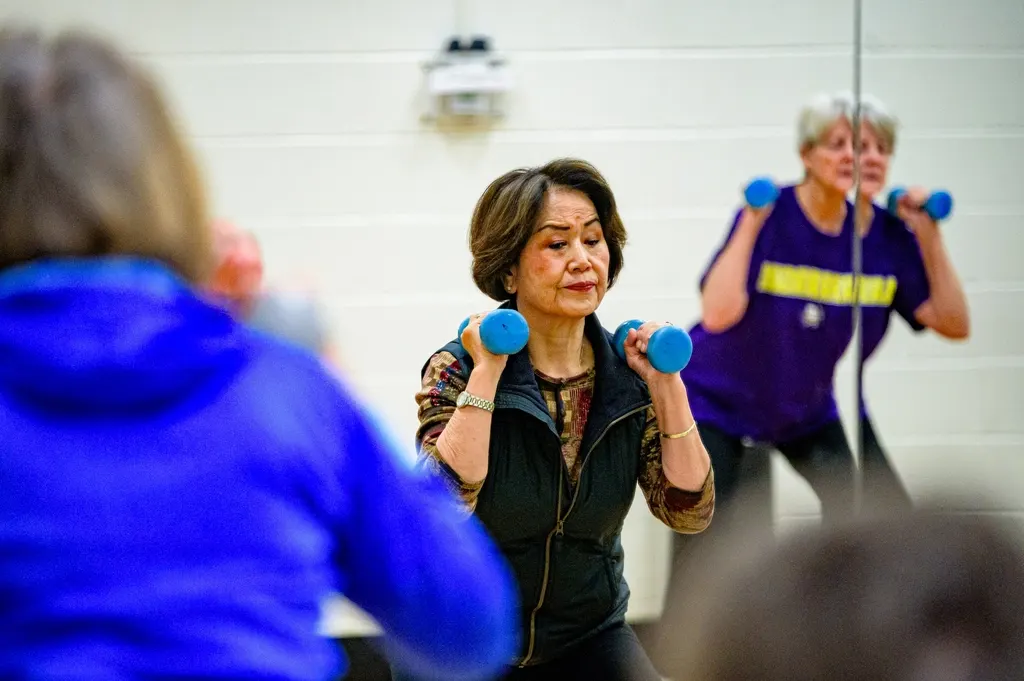
Strength and balance can improve at any age. The NHS physical activity guidelines for older adults recommend activities that improve strength, balance and flexibility on at least two days a week, alongside regular moderate activity and breaking up long periods of sitting.
- Local falls prevention classes, often run through the NHS or council, are designed for people who feel unsteady.
- Tai chi, dance and chair-based exercise can help balance and strength.
- A physiotherapist can set exercises that are safe for your relative's health and ability.
If your relative is frail or has fallen, ask the GP for a referral to a falls service or physiotherapist rather than starting demanding exercise alone.
How do you make the home safer?
Walk through the home with your relative and look at it from their point of view, including at night.
Floors and stairs
- remove or firmly secure loose rugs and mats
- keep floors, stairs and hallways clear of clutter, cables and shoes
- repair worn carpet and uneven flooring
- fit sturdy handrails on both sides of the stairs if possible, and mark step edges clearly
Lighting
- use bright bulbs on stairs, landings and hallways
- make sure there are light switches at the top and bottom of stairs
- add night lights or motion-sensor lights for trips to the toilet
- keep a lamp or torch within reach of the bed
Bathroom and kitchen
- non-slip mats in the bath and shower
- grab rails by the toilet, bath and shower
- a raised toilet seat or shower seat if needed
- everyday items stored between waist and shoulder height, to avoid ladders and step stools
Clothes and footwear
- well-fitting shoes or slippers with a firm back and non-slip soles
- no walking in socks or loose slippers on smooth floors
- trousers and dressing gowns that do not drag on the floor
How can technology help if a fall happens?
- Personal alarms worn as a pendant or wristband connect to a response centre.
- Fall detectors can raise an alert automatically.
- Key safes let responders get in quickly.
- Sensors can alert family to unusual inactivity.
Many councils run community alarm or telecare schemes. Ask the council what is available and what it costs.
What help is available with equipment and adaptations?
A needs assessment
Your relative can ask the council's adult social care team for a free needs assessment, whatever their savings. It can lead to equipment, minor adaptations and support at home. An occupational therapist may visit to assess the home.
Disabled Facilities Grant
Larger adaptations, such as a stairlift, level-access shower or ramp, may be funded through a Disabled Facilities Grant from the council. According to GOV.UK's guide to Disabled Facilities Grants, the grant is means-tested for adults and has a maximum of up to £30,000 in England, up to £36,000 in Wales and up to £25,000 in Northern Ireland. The grants are not available in Scotland, where the council can advise on other help.
Benefits
Attendance Allowance is available to people over State Pension age who need help or supervision because of an illness or disability. It is not means-tested. In Scotland, new claims are for Pension Age Disability Payment. The money can be spent however is most useful, including on alarms or extra help.
This is general information. Eligibility rules and amounts change, so check GOV.UK or ask the council or Citizens Advice about your relative's situation.
When is home no longer safe enough?
Repeated falls, difficulty getting up, or losing confidence to move around are signs that more support may be needed. Options include more help at home, a council reassessment, or a move to a care home. If you look at care homes, ask how they assess and manage falls risk, especially at night.
Frequently asked questions
What should I do straight after my relative falls?
Check for injury before helping. Call 999 if they have hit their head, may have hurt their back, neck or hip, or cannot get up. If they are unhurt, they should get up slowly using stable furniture, and then see the GP to look for the cause.
Can we get free equipment to prevent falls?
Often, yes. After a council needs assessment, small items such as grab rails and bathing aids may be provided. Larger adaptations may be funded through a means-tested Disabled Facilities Grant, outside Scotland.
Are personal alarms worth it?
For people who live alone or are at risk of falling, an alarm can mean help arrives quickly. Compare costs, the response service and whether automatic fall detection is included, and ask whether the council runs a scheme.
Can medicines really cause falls?
Yes. Some medicines cause dizziness, drowsiness or low blood pressure, especially in combination. Ask the GP or pharmacist for a review, and do not stop any medicine without advice.
Is exercise safe if my relative is already frail?
Usually, with the right support. Falls services, physiotherapists and specialist classes offer exercises suited to frail people. Ask the GP for a referral before starting.
Key takeaways
- Most falls have several causes, so tackle health, fitness and the home together.
- After any fall, see the GP and ask about a falls service.
- Review medicines, eyesight, hearing, blood pressure, feet and bone health.
- Strength and balance activity on at least two days a week helps at any age.
- Fix hazards at home, and use the council's needs assessment and Disabled Facilities Grants for equipment and adaptations.